If you have ever driven through Bloomfield Village and wondered why the neighborhood feels so polished and consistent, the answer is not just landscaping or lot size. Architecture plays a major role. In this part of Bloomfield Township, home style, proportion, and thoughtful updates all work together to create a streetscape that feels established, balanced, and lasting. If you are buying, selling, or simply trying to understand what gives the neighborhood its appeal, this guide will help you read Bloomfield Village with a more informed eye. Let’s dive in.
Bloomfield Village has a clear architectural identity
Bloomfield Village is a planned community of nearly 1,000 homes in roughly one square mile of Bloomfield Township. Established in 1924 by Judson Bradway, it has long maintained a strong design-review structure that helps preserve the neighborhood’s identity.
That framework still matters today. Original house plans are archived, exterior changes require approval, and new construction is expected to match nearby homes in scale and character. The township master plan also treats Bloomfield Village as a distinct neighborhood, with architecture, setbacks, and streetscape playing a key role in preserving value and visual continuity.
Streetscape shapes the look of the homes
Part of Bloomfield Village’s charm comes from how the homes sit on their lots. The neighborhood is known for large lots, open lawns, privacy plantings, rear-entry garages, and sidewalks along curving, tree-lined streets.
Those details affect more than curb appeal. They create breathing room between homes and help the architecture stand out without feeling crowded or overstated. The result is a neighborhood where the homes feel connected, even when individual styles vary.
It is also worth noting that the Village was developed in 12 sections with different lot sizes and character. That means the right design for one street may not be the right fit for another. In Bloomfield Village, context matters.
Traditional styles define Bloomfield Village
The Village’s design guidelines favor traditional American and European house forms from the 19th century and earlier. The approved style family includes Colonial Revival, Dutch Colonial, French Colonial, Georgian, Federal, Tudor, Cape Cod/New England, Farm House, Greek Revival, Prairie, Craftsman, Italianate, French Eclectic, Spanish Colonial, Mission, and related revival styles.
Even with that broad list, two style families stand out most clearly in Bloomfield Village: Colonial Revival and Tudor Revival. That makes sense given the neighborhood’s primary development period in the 1920s and 1930s, when those styles were especially popular in residential design.
An association history page also notes that land once used for farmland and orchards now contains colonial homes. That reinforces how strongly the Colonial family is represented in the neighborhood today.
Colonial homes bring balance and symmetry
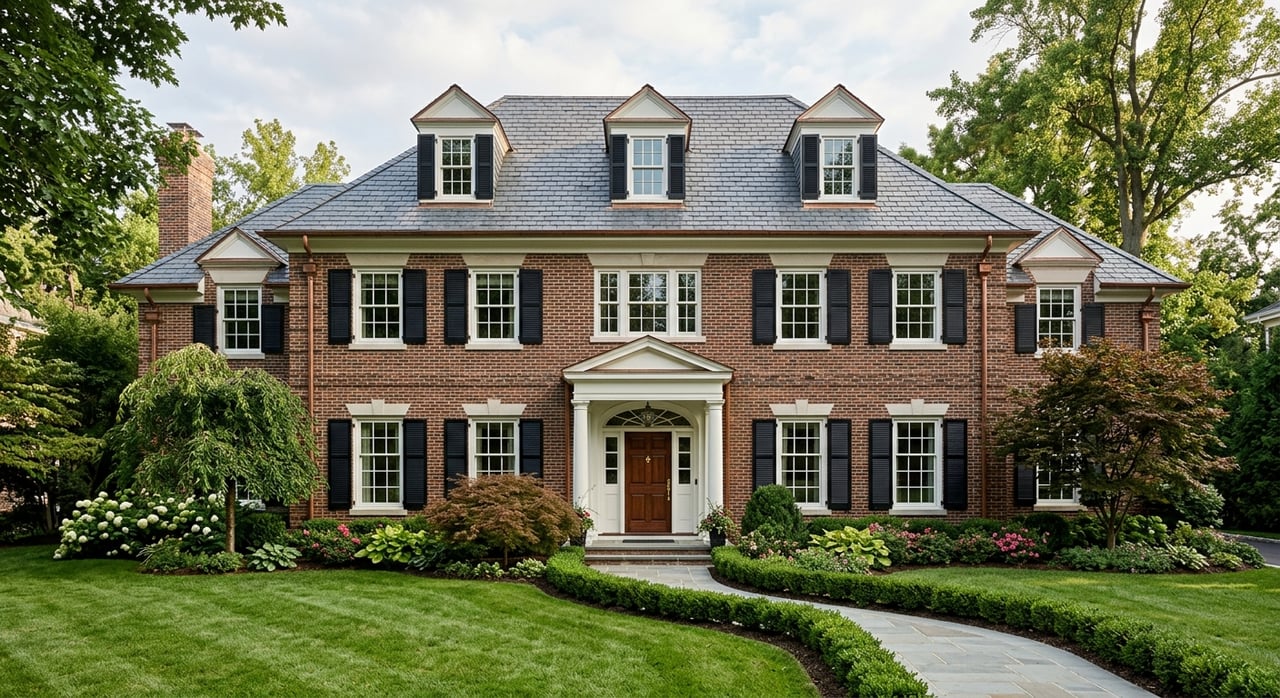
Colonial Revival homes in Bloomfield Village often feel orderly, timeless, and quietly formal. These homes are usually defined by symmetry, centered entrances, double-hung windows, shutters, dormers, and side-gabled or hipped roofs.
You will often notice a composed front elevation where the windows line up evenly and the entry acts as a visual anchor. Details like sidelights, fanlights, and restrained porch elements can add character without making the façade feel busy.
The Village guidelines also pay attention to finishing details. For example, lighter window colors are expected on Colonial and Colonial Revival homes, while dark windows are generally not approved for that style. That kind of design consistency helps protect the historic feel of the streetscape.
What buyers notice in Colonial layouts
Inside, many older Colonial homes tend to feel more formal and compartmentalized than a newer open-concept house. Front rooms are often clearly defined, which can create a sense of structure and separation that some buyers still value.
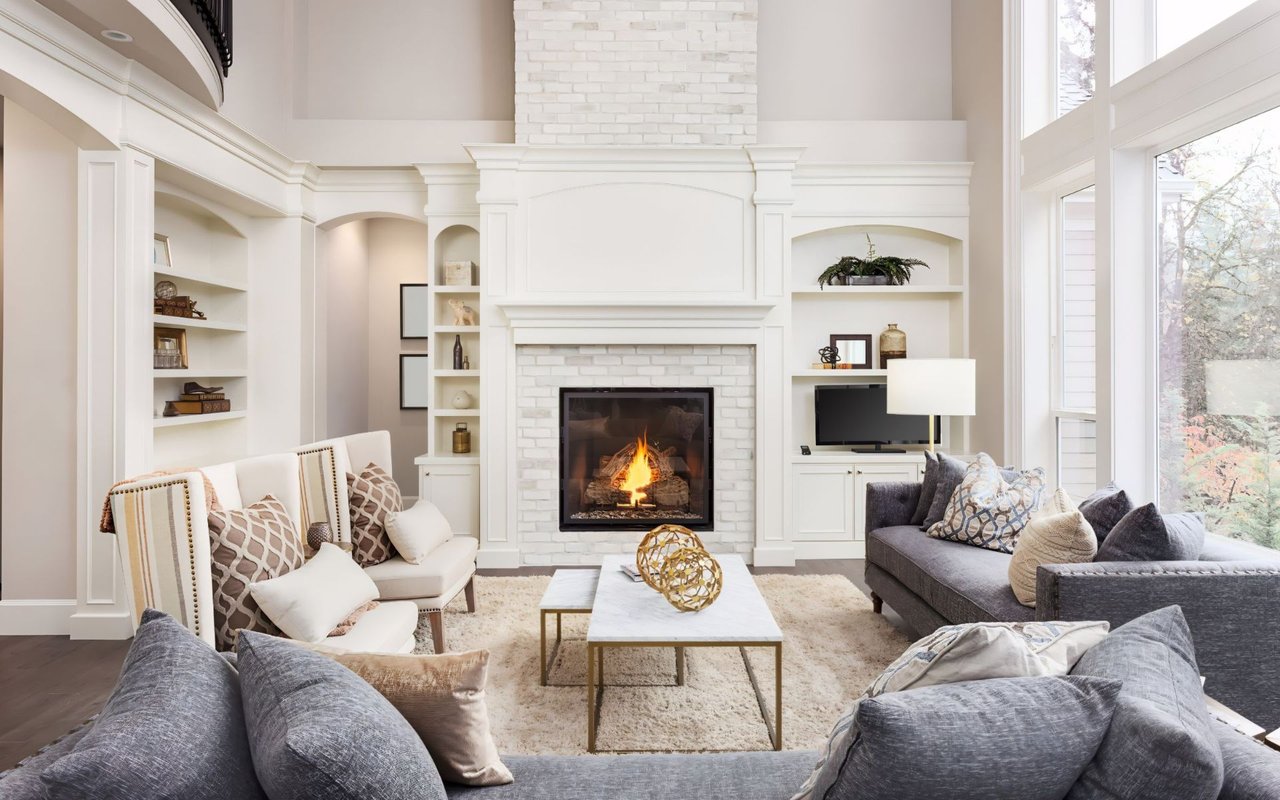
At the same time, later renovations often improve flow where it matters most. Kitchens and family areas may be opened up while the front-facing symmetry and traditional exterior character remain intact. In Bloomfield Village, the best updates often improve daily living without changing the home’s architectural identity.
Tudor homes add texture and drama
If Colonial homes are the calm, balanced side of Bloomfield Village, Tudor homes are the more picturesque counterpart. Tudor Revival houses are commonly recognized by steep roofs, cross gables, prominent chimneys, narrow multi-pane windows, arched entries, and exterior materials like masonry or stucco.
These homes usually create a stronger sense of texture and visual movement. Rooflines can be more varied, entryways can feel more dramatic, and exterior detailing often gives the home a storybook quality.
The Village guidelines also reflect those historical differences. Darker window treatments are considered more appropriate on Tudor homes than on Colonial homes, which shows how carefully style-specific details are evaluated within the neighborhood.
Why Tudor curb appeal stands out
Tudor homes often make an impression from the street because their forms are less restrained. A tall chimney, a steep front gable, or an arched doorway can turn a home into a focal point without feeling out of place.
In Bloomfield Village, that works best when the details stay historically scaled and the overall massing fits the surrounding homes. The neighborhood rewards character, but it also rewards discipline.
Other historic styles also appear
While Colonial and Tudor homes tend to define the neighborhood most clearly, they are not the only styles you may see. Bloomfield Village guidelines also recognize Dutch Colonial, French Eclectic, Georgian, Federal, Cape Cod/New England, Farm House, Greek Revival, Prairie, Craftsman, Italianate, Spanish Colonial, and Mission influences.
What matters most is not just the label attached to the style. Projects are evaluated primarily on proportion, materials, and how well the home fits with adjacent properties. In other words, good design in Bloomfield Village is as much about relationship to the block as it is about the home itself.
Updates work best when they feel original
One of the most important things to understand about Bloomfield Village is that renovations are expected to feel seamless. Additions should look integrated with the original house, and attached garages should be rear-entry when possible.
Exterior changes require approval, and homeowners are encouraged to consult original plans on file when planning renovations. That creates a high bar, but it also helps preserve the neighborhood’s long-term appeal.
For buyers, this often translates into homes that blend period exteriors with more livable interiors. A local renovation example of a 1956 Bloomfield Colonial showed this approach clearly, with a brighter, enlarged kitchen created by removing a partition wall, connecting the kitchen and breakfast nook, and centering the island and hood toward the formal dining room while preserving colonial balance.
Smart renovations in Bloomfield Village
The most successful improvements usually share a few traits:
- They respect the original scale of the house
- They preserve the front-facing architectural balance
- They use materials that feel historically compatible
- They improve function without drawing attention to the change
- They keep garages and secondary elements visually quiet
For sellers, that usually means subtle improvements can do more for value than overly trendy ones. For buyers, it means a well-updated home may offer modern comfort without sacrificing neighborhood fit.
Materials and details matter here
In Bloomfield Village, curb appeal is tied closely to architectural restraint. The strongest visual signals tend to be balanced massing, historically scaled windows, shutters, traditional door designs, and quality materials such as brick, stone, wood, or compatible substitutes.
The Village guidelines specifically require historically plausible window muntins and proportions, and they require shutters in most cases. Landscaping also plays a supporting role by softening secondary elements and keeping the emphasis on the home itself.
That attention to detail is a big reason the neighborhood feels cohesive. Nothing has to be identical, but the homes tend to speak the same architectural language.
What this means if you are buying
If you are shopping in Bloomfield Village, it helps to look beyond finishes and décor. Pay attention to proportion, window placement, roof shape, and how any additions connect to the original structure.
A beautiful kitchen matters, but so does whether the home still feels architecturally balanced from the street. In a neighborhood like this, long-term appeal often comes from the combination of a strong period exterior and thoughtful interior modernization.
If you are comparing properties, consider these questions:
- Does the home’s style feel clear and consistent?
- Have updates respected the original character?
- Do the windows, shutters, and doors look historically appropriate?
- Does the garage placement stay visually secondary?
- Does the home fit the scale and rhythm of the block?
What this means if you are selling
If you own a home in Bloomfield Village, presentation should highlight what makes the architecture work. Buyers in this market often respond to original style, quality materials, and improvements that feel tailored to the house rather than imposed on it.
That means the story of your home matters. A balanced Colonial, a richly detailed Tudor, or a carefully renovated traditional home can all stand out when the design choices feel coherent and the marketing explains them clearly.
In a neighborhood where identity and value are closely linked, small details can shape how buyers perceive quality. The right guidance can help you position those details in a way that feels polished, accurate, and compelling.
Bloomfield Village is a neighborhood where architecture is not just background scenery. It is part of the value, part of the lifestyle, and part of what makes each home worth understanding more carefully. If you are considering a move in Bloomfield Township and want a sharp read on style, condition, and neighborhood fit, Rob Haber Real Estate can help you navigate the details with clarity and local insight.
FAQs
What architectural styles are most common in Bloomfield Village?
- Bloomfield Village includes several traditional styles, but Colonial Revival and Tudor Revival are the two style families that most strongly define the neighborhood.
What makes Bloomfield Village homes look so consistent?
- The neighborhood uses a design-review structure, archived original plans, and guidelines for scale, materials, setbacks, and architectural fit, which help preserve a cohesive streetscape.
What features are common in Bloomfield Village Colonial homes?
- Common Colonial features include symmetrical façades, centered front entries, double-hung windows, shutters, dormers, and side-gabled or hipped roofs.
What features are common in Bloomfield Village Tudor homes?
- Common Tudor features include steep roofs, cross gables, prominent chimneys, narrow multi-pane windows, arched entries, and masonry or stucco surfaces.
Can you renovate a home in Bloomfield Village?
- Yes, but exterior changes require approval, additions should appear seamless, and homeowners are encouraged to consult original house plans when planning updates.
What types of updates add value in Bloomfield Village?
- Improvements that tend to support value are the ones that feel original to the home, use compatible materials, preserve architectural balance, and modernize living spaces without disrupting the exterior character.