Looking for a place where privacy feels built into the landscape, not added as an afterthought? Franklin offers a rare kind of Oakland County living: larger lots, mature trees, historic character, and a village setting that has intentionally stayed low-density and residential. If you are considering a move to Franklin, this guide will help you understand what estate-style living really looks like here and why the village stands apart. Let’s dive in.
Why Franklin Feels Different
Franklin is a small historic village in Oakland County with a population of 3,139 as of 2020. That small scale matters because it helps explain why the community still feels quiet, residential, and distinctly separate from a more typical suburban pattern.
Village planning documents make the goal very clear: Franklin is meant to preserve a rural-like environment and identity. Its master plan says the community should remain predominantly large-lot and single-family, with only one historic mixed-use village center and very limited nonresidential development.
That planning framework shapes the experience of living here. Instead of residential streets blending into broad commercial corridors, Franklin is designed to protect space, character, and a softer visual feel.
Estate Living Starts With Lot Size
When people talk about estate living in Franklin, they are not just using a marketing phrase. The village’s land use framework directly supports larger residential lots and a lower-density setting.
Franklin’s future land use plan includes several residential categories with substantial minimum lot sizes:
- Estate Residential: 130,000 square feet, or about 2.98 acres
- Large Lot Residential: 65,000 square feet, or about 1.49 acres
- Low Density Residential: 30,000 square feet, or about 0.69 acre
The village master plan also notes that the average residential lot is slightly larger than one acre. It further states that more than 20 homes sit on lots of three acres or more.
That combination is one of the clearest reasons Franklin attracts buyers who value breathing room. In practical terms, you may find more separation between homes, more natural screening, and a setting where the lot itself plays a major role in daily livability.
Space Here Is Part of the Identity
In many communities, larger parcels appear in scattered pockets. In Franklin, larger lots are part of the village’s identity and planning vision.
The village has also limited where nonresidential uses can occur. According to the master plan, commercial activity is generally reserved for the Village Center and one office and bank parcel at Thirteen Mile and Telegraph. That helps reduce commercial spillover into residential areas and supports the calm, private feel many buyers are looking for.
Privacy Comes From More Than Acreage
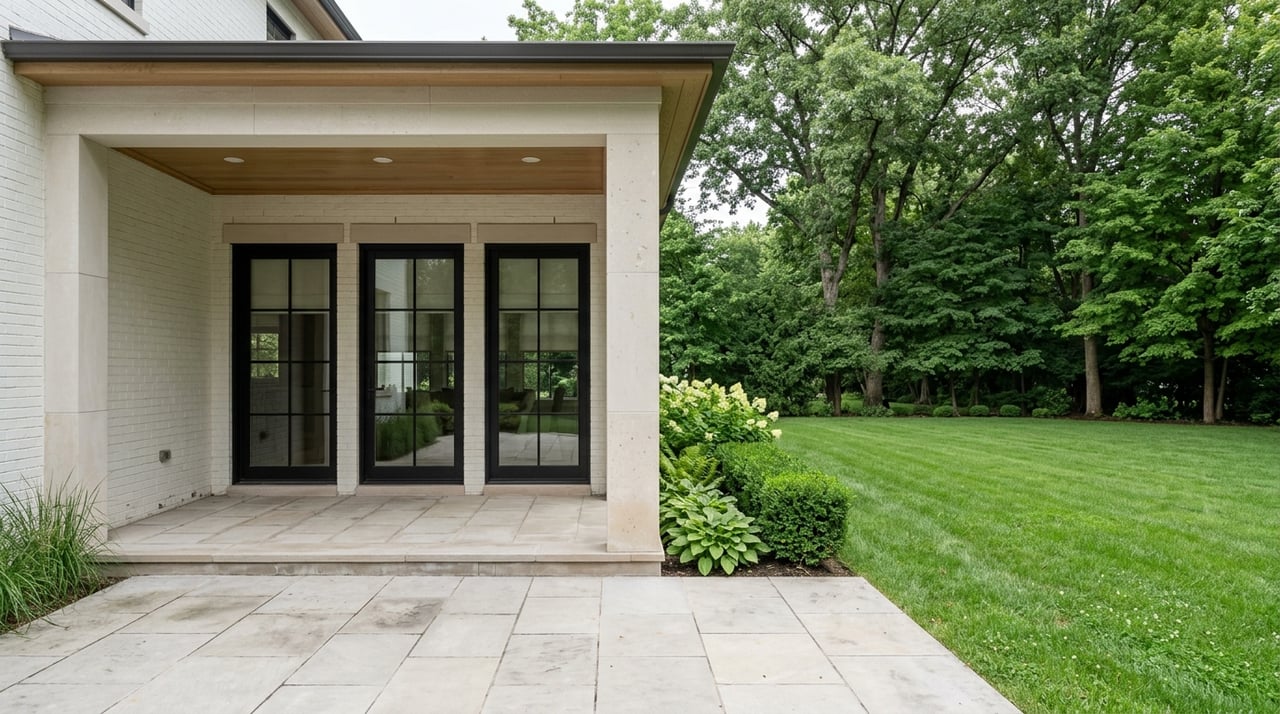
A large lot can create distance, but Franklin’s privacy story goes further than that. The village’s mature landscape is a major part of what makes homes feel tucked away.
The master plan says mature and heritage trees line the streets and grace the lawns of most homes. It also notes that heavily wooded areas and tree-based natural barriers between properties are common, often serving the role that fences might fill elsewhere.
Those wooded areas do more than look attractive. The same planning documents state that they provide privacy and noise buffering, which is a meaningful advantage if you want a setting that feels peaceful and visually soft.
Tree Preservation Shapes the Experience
Franklin has treated tree preservation as a formal planning priority. The village has been recognized as a Tree City since 2005, and its planning documents describe ongoing tree management, including hazardous tree removal and replanting.
Setback and height standards also play a role in preserving the village’s rural character. For you as a buyer or seller, that means the sense of privacy in Franklin is tied not only to individual properties, but also to broader planning choices that help maintain the village’s overall feel.
Character Runs Deep in Franklin
Franklin is not a one-style community, and that is part of its appeal. The housing stock is layered rather than uniform, which gives the village a more collected and established feel.
Village documents describe single-family housing on spacious lots as the predominant form of development. They also note a mix of contemporary, classic, and historic homes, along with a limited amount of condominium housing, especially closer to the Village Center.
For buyers, that means Franklin can offer different expressions of estate-style living. Some properties lean historic and architectural, while others may feel more updated, transitional, or contemporary.
What Home Types You May Find
Based on village planning and historic district materials, Franklin’s housing mix includes:
- Historic homes in and around the historic core
- Postwar subdivision-era homes around the historic district
- Updated and contemporary single-family residences in other parts of the village
- Limited condominium housing near the Village Center
This variety is worth understanding before you start your search. Franklin is not a uniform estate enclave where every home follows the same pattern. Instead, it offers space and character across different eras and home styles.
The Historic District Adds Another Layer
Franklin’s sense of place is closely tied to its historic district and village center. The village’s historic district guide notes that Franklin’s early settlement began in 1824, that it was officially named Franklin by 1828, and that it was incorporated as a village on June 15, 1954.
The same guide states that Franklin was listed in the National Register of Historic Places in 1969 as the first historic district in Michigan on that register. That is a meaningful part of the village’s identity and helps explain why the community feels so rooted and distinct.
Architectural Variety Supports the Charm
The historic district includes a notable range of architectural styles. Village materials identify Greek Revival, Vernacular, Queen Anne, Colonial Revival, American Foursquare, and Craftsman homes within the district.
For you as a buyer, this means Franklin’s character is not tied to one period or one visual theme. The charm comes from a layered architectural story and from the way those homes sit within mature landscapes and open-space features.
Historic Homes May Come With Added Review
If you are considering a home in or near the historic district, it is important to understand that preservation expectations may apply. The village’s design review process helps preserve historic resources, large trees, and landscape elements within the district.
That does not make historic ownership a negative. It simply means you should approach the purchase with clear expectations, especially if you are thinking about future exterior changes or renovations.
The Village Center Matters
Estate-style living in Franklin is not just about lot size and privacy. It is also about having a true village center that gives the community a focal point.
The master plan describes the Village Center as the center of village activity and the main place residents gather. It includes public and quasi-public uses such as the Broughton House, cemetery, community church, Village Green, and FCA grounds.
Most commercial development is planned along the east side of Franklin Road, with parking to the rear. That planning choice helps preserve a more walkable, village-like appearance and keeps the center aligned with Franklin’s broader character.
What Buyers Should Know About Franklin
If you are drawn to privacy, mature landscaping, and a more established setting, Franklin may check boxes that are hard to find in a conventional suburban neighborhood. The appeal here is not just square footage. It is the combination of land, tree cover, architectural variety, and a planning framework that aims to protect the village’s identity.
You should also know that Franklin is not one-dimensional. Some homes sit on very large parcels, some are closer to the historic core, and some housing near the Village Center follows a different pattern. A thoughtful search matters because the right fit depends on whether you prioritize acreage, architecture, renovation potential, or proximity to the village center.
For buyers in this part of Oakland County, that nuance is important. Franklin offers a distinct setting, but the inventory can vary meaningfully from one area of the village to another.
What Sellers Can Emphasize
If you own a home in Franklin, the strongest positioning usually goes beyond a general luxury label. The more accurate story is often about privacy-sensitive living, larger lots, mature tree cover, and the character that comes from a protected village setting.
For some homes, the value story may also include architectural history or a semi-historic context. For others, it may center on lot scale, wooded screening, or how the home fits into Franklin’s low-density residential pattern.
This is where precise marketing matters. Buyers considering Franklin are often responding to a specific lifestyle and setting, not just a feature list, and your home should be presented with that context in mind.
If you are buying or selling in Franklin, working with a team that understands how to position privacy, lot value, architectural character, and build quality can make a real difference. To talk through your goals in this market, connect with Rob Haber Real Estate.
FAQs
What makes Franklin, MI feel like estate living?
- Franklin’s estate-style feel comes from its large residential lots, low-density planning, mature tree cover, and limited nonresidential development.
How large are lots in Franklin, MI?
- Franklin’s planning documents list minimum lot sizes of about 2.98 acres for Estate Residential, about 1.49 acres for Large Lot Residential, and about 0.69 acre for Low Density Residential.
What types of homes are found in Franklin, MI?
- Franklin includes historic homes, postwar homes near the historic district, updated and contemporary single-family homes, and a limited amount of condominium housing near the Village Center.
Does Franklin, MI have a historic district?
- Yes. Franklin’s historic district was listed in the National Register of Historic Places in 1969 and was the first historic district in Michigan on that register.
Why do Franklin, MI homes feel private?
- Privacy in Franklin comes from a combination of larger lots, mature and heritage trees, wooded areas between properties, and planning standards intended to preserve a rural-like character.
What is the Village Center in Franklin, MI?
- The Village Center is the main gathering area in Franklin and includes public and quasi-public spaces such as the Broughton House, cemetery, community church, Village Green, and FCA grounds.