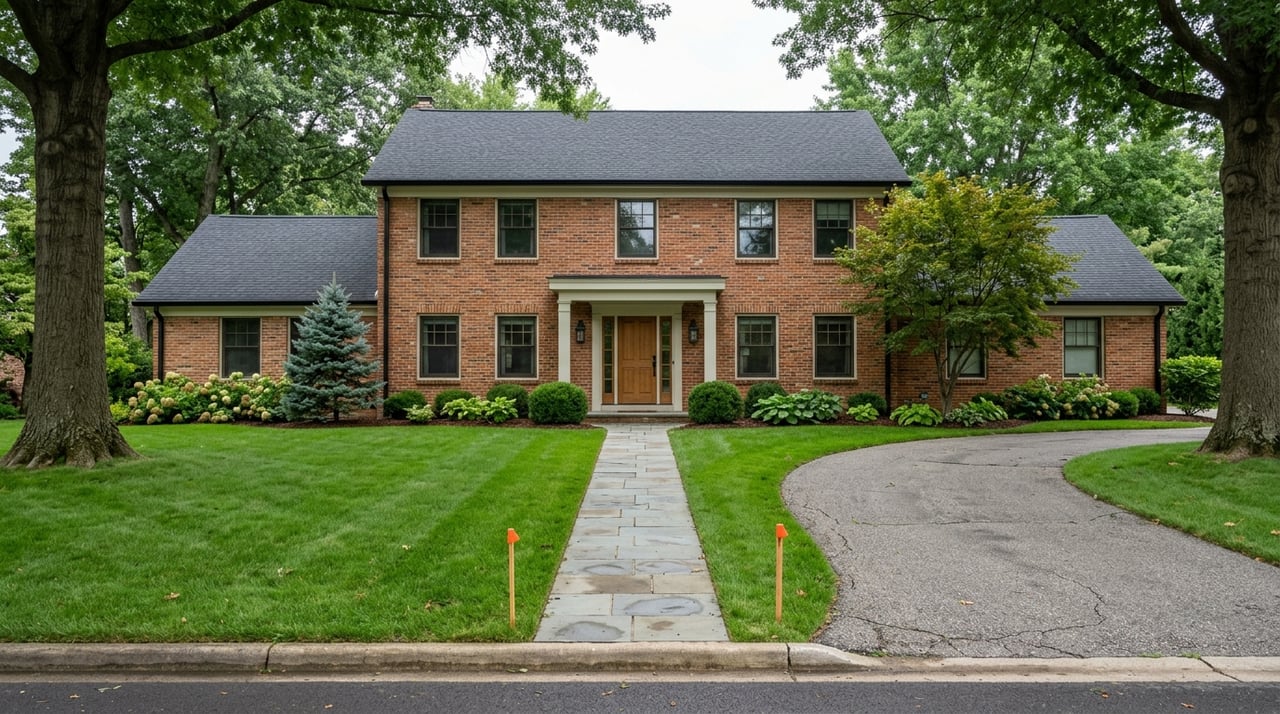
If you have looked at older homes in Bloomfield and thought, "Is the real value really in the lot?" the answer is often yes. In a built-out market where many homes date back to the 1950s growth era, teardown and redevelopment can be a practical path for buyers and investors who want to unlock a property’s next chapter. The key is knowing how to evaluate the site, the rules, and the neighborhood fit before you commit. Let’s dive in.
Why teardowns are common in Bloomfield
Bloomfield Township is a well-established residential community with a large share of its land occupied by single-family homes. Because the area is largely built out, one of the main ways it has accommodated change is by demolishing older homes and replacing them with larger new ones.
That matters if you are evaluating an opportunity today. In Bloomfield, redevelopment is not a fringe strategy. It is part of how the housing stock has evolved, especially in areas where lot size, mature landscaping, and location support a higher-value replacement home.
The setting also helps explain the appeal. Township planning materials describe scenic lakes, rolling hills, mature trees, and larger-lot patterns in parts of the community, all of which can make a well-chosen site more valuable than the existing structure sitting on it.
Lot value often drives the opportunity
When you assess a teardown candidate in Bloomfield, the current house may matter less than the parcel’s redevelopment potential. A dated home can be removed. A weak lot, poor buildable area, or restrictive site condition is much harder to fix.
That is why the first question is not "How old is the house?" It is "What can this lot actually support?"
Check the buildable envelope first
In Bloomfield Township, zoning standards shape what can be built on a site. Minimum lot area, lot width, and required setbacks all affect the usable building area, not just the raw square footage shown on a listing.
For example, the R-1 district requires a minimum lot size of 16,000 square feet with sewer or 22,000 square feet without sewer, along with a minimum width of 100 feet with sewer or 150 feet without. Front setbacks are 40 feet, side setbacks are 16 feet, and rear setbacks are 35 feet.
R-2 and R-3 standards can be even more demanding. In addition, corner lots are treated differently because they have two street fronts, which means both front-yard setback requirements may apply.
This is where many buyers misjudge a redevelopment play. Two lots with similar square footage can have very different building potential based on width, sewer availability, shape, frontage, and setback constraints.
Sewer access can change the math
Sewer availability is not a minor detail in Bloomfield. It can change the minimum lot-size and width thresholds that apply to a property.
That means a parcel that looks promising on paper may become less attractive once utility conditions are confirmed. Before you underwrite value, make sure you know which zoning thresholds apply to that specific site.
Neighborhood fit still matters
A redevelopment opportunity is not just a zoning exercise. Bloomfield neighborhoods have distinct patterns, from areas with mature tree-lined streets and period homes to western sections with larger lots, winding roads, and more varied topography.
The strongest opportunities are usually the ones where a replacement home can fit the block’s scale, lot character, and street pattern. Even when a site technically works, the upside may be lower if the finished product feels out of place for the immediate setting.
Regulatory filters can change the deal
A lot may look perfect at first glance, but local approvals and site constraints can quickly reshape the budget and timeline. In Bloomfield, zoning is only one layer of the review process.
Before moving forward, you should confirm whether other restrictions or approvals could affect the project. These issues often determine whether a redevelopment plan stays profitable and realistic.
Deed restrictions and associations
Bloomfield Township notes that subdivision deeds, conditions, and restrictions may be more restrictive than township zoning. The township also states that association comments may be required before a permit is issued.
This is an important checkpoint. Even if the zoning ordinance appears to allow your plan, private restrictions or subdivision requirements may narrow what you can build, how it must be placed, or what design standards may apply.
Tree preservation rules
Trees can be a major factor in Bloomfield redevelopment. The township requires a tree preservation permit for protected or landmark trees affected by new construction, redevelopment, or clear-cutting.
Protected trees are defined by the township as those 8 inches DBH or larger, and landmark trees are 24 inches DBH or larger. On heavily wooded lots, tree impacts can materially affect site planning, demolition strategy, and cost.
Wetlands, floodplain, and environmental review
Environmental conditions deserve careful attention early in the process. Township materials show that Engineering and Environmental Services reviews projects affecting lakes, wetlands, and woodlands, and the township maintains a wetlands inventory covering wetlands and watercourses.
Floodplain controls also apply in all districts. If a property is near water, low areas, or heavily naturalized land, these factors may limit where a new home, driveway, or other improvements can go.
Rights-of-way and easements
Road rights-of-way and easements are another common issue on redevelopment sites. The township explains that rights-of-way are public land controlled by the township, the Road Commission for Oakland County, or MDOT, and that underground water, sewer, and utility infrastructure often runs through them.
This matters because driveway changes, service work, or any work in the right-of-way may require permits. It can also affect where you place a new drive, utilities, grading, or landscape features.
Demolition and permitting need early planning
A teardown project can lose momentum quickly if you wait too long to verify the permit path. In Bloomfield Township, both new residential construction and demolition require building permits.
The township says plan review is roughly 10 business days, and its FAQ advises allowing up to two weeks. That may sound manageable, but the quality and completeness of your submission can affect how smoothly the process moves.
Know what the township requires
Residential projects require three sets of plans. If the home will have 3,500 square feet or more of livable area, the plans must be signed and sealed by a Michigan-licensed engineer or architect.
Starting work without a permit is a violation of state code and township ordinance. For buyers and investors, that makes pre-closing diligence especially important if timing is part of the financial strategy.
Demolition has its own checklist
Bloomfield’s demolition packet requires several items beyond a basic permit application. These include a site plan showing the finished first-floor elevation, a tree preservation survey, utility clearance letters, and, where applicable, well abandonment and septic documentation.
The township also requires water shutoff and meter removal, along with a plumbing permit for water and sewer disconnects. After exterior demolition, the site must be graded within five business days and restored with permanent vegetation by the nearest growing season unless new construction has already been applied for.
Budget for more than the build
One of the biggest mistakes in teardown underwriting is focusing too much on purchase price and vertical construction cost. In Bloomfield, site-related and holding-period costs can be meaningful.
A disciplined review should include utility coordination, demolition compliance, site restoration, environmental review, tree-related work, and possible right-of-way or access adjustments.
Utility coordination may add cost
Bloomfield Township purchases water from SOCWA and participates in the Evergreen-Farmington sewage system. The township also notes that its water and sewer system has an average pipe age of about 50 years, with some pipes nearly 90 years old.
That does not mean every site will have a utility problem. It does mean you should leave room in the budget and timeline for service-line questions, coordination, and potential off-site considerations.
Holding costs do not disappear
Even during a holding period, township property maintenance standards still apply. Grass must be kept under 8 inches, inoperable or unregistered vehicles are generally not allowed outside a garage, and exterior buildings must be maintained.
If a project stalls between closing, demolition, and rebuild, these carrying obligations still remain. That is especially important for buyers planning to phase the project over time.
A practical Bloomfield teardown checklist
If you are evaluating redevelopment potential in Bloomfield, start with a clear process:
- Confirm zoning district and dimensional standards
- Verify sewer availability and how it affects lot requirements
- Measure the realistic buildable envelope, not just lot size
- Review deed restrictions, subdivision rules, and association requirements
- Identify protected trees and likely preservation issues
- Check for wetlands, floodplain, woodlands, and lake-related constraints
- Review rights-of-way, easements, and driveway access questions
- Understand demolition permit requirements and utility disconnect steps
- Budget for carrying costs, grading, restoration, and coordination time
- Test whether the replacement home will fit the block and price tier
Why local guidance matters
In Bloomfield, teardown opportunities can be compelling, but they are rarely simple. The best outcomes usually come from seeing the property as both a homesite and a regulated project, with value tied to build quality, lot character, and neighborhood fit.
That is where local market knowledge and construction fluency can make a real difference. If you are weighing a teardown, redevelopment parcel, or lot-driven purchase in Bloomfield, Rob Haber Real Estate can help you evaluate the opportunity with a sharper eye for site potential, risk, and long-term value.
FAQs
What makes a Bloomfield home a teardown candidate?
- A teardown candidate in Bloomfield is often a property where the lot, location, and redevelopment potential are more valuable than the existing house, especially in a built-out area where replacement homes are common.
How do zoning rules affect redevelopment in Bloomfield Township?
- Zoning rules affect minimum lot size, width, and setbacks, which determine the buildable envelope and can significantly change what size and type of replacement home a site can support.
Why does sewer access matter for a Bloomfield rebuild?
- Sewer availability can change the minimum lot-size and width requirements for residential districts, so it directly affects whether a parcel qualifies for a planned redevelopment concept.
What site issues can delay a Bloomfield teardown project?
- Common issues include tree preservation requirements, wetlands or floodplain review, easements, right-of-way limits, utility coordination, and private deed or association restrictions.
What permits are needed for demolition in Bloomfield Township?
- Demolition requires a building permit, and the township’s process may also require items such as a site plan, tree preservation survey, utility clearance letters, and utility disconnect documentation.
How should you evaluate a redevelopment lot in Bloomfield?
- You should assess zoning, buildable area, sewer status, environmental constraints, tree impacts, access, demolition requirements, carrying costs, and whether the future home will fit the surrounding neighborhood pattern and value range.