If you are drawn to privacy, architecture, and a setting that feels set apart from the usual suburban pattern, Bloomfield Hills stands out quickly. This is a small, intentionally residential city where land, landscape, and home design work together in a way you can feel as soon as you enter. If you are considering a move here, it helps to understand what truly defines the lifestyle and why the estate character remains so distinct. Let’s dive in.
What makes Bloomfield Hills unique
Bloomfield Hills is a small city in southeast Oakland County with a 2020 census population of 4,460. It sits about 20 miles northwest of Detroit and is known for rolling terrain, woodlands, watercourses, and notable architecture. That setting creates a different experience than communities built around busier commercial corridors or denser neighborhood patterns.
The city is also largely built out and primarily residential. Local planning materials describe tree-lined streets, generous setbacks, lush landscaping, and discreet signage as core parts of its identity. In simple terms, Bloomfield Hills feels carefully protected, with an emphasis on preserving a quiet and visually consistent residential environment.
How the estate character took shape
Bloomfield Hills developed from farm and orchard land into an estate landscape over time. According to city materials, many early buyers were industrialists and other affluent Detroit-area residents who purchased large parcels for summer and weekend homes before later settling permanently. That early pattern still helps explain the large lots, privacy, and estate-style feel you see today.
That history matters because it shaped more than lot size. It also created a long-standing preference for wooded settings, quiet surroundings, and homes placed thoughtfully within the land. Even now, the city describes its residential character in terms of rural qualities, stately homes, and privacy.
Why land matters here
In Bloomfield Hills, the lot is often part of the home’s appeal, not just the space around it. Rolling topography, mature trees, and landscaped grounds contribute to how properties are experienced from the street and from within the home itself. In many cases, the setting adds as much to the impression of a property as the square footage or finishes.
That is one reason the city pays close attention to things like accessory structures, gates, walls, larger house sizes, and tree protection. The goal is to manage change while preserving neighborhood character. For you as a buyer or seller, that means the relationship between architecture and site planning is especially important in this market.
Architecture is part of daily life
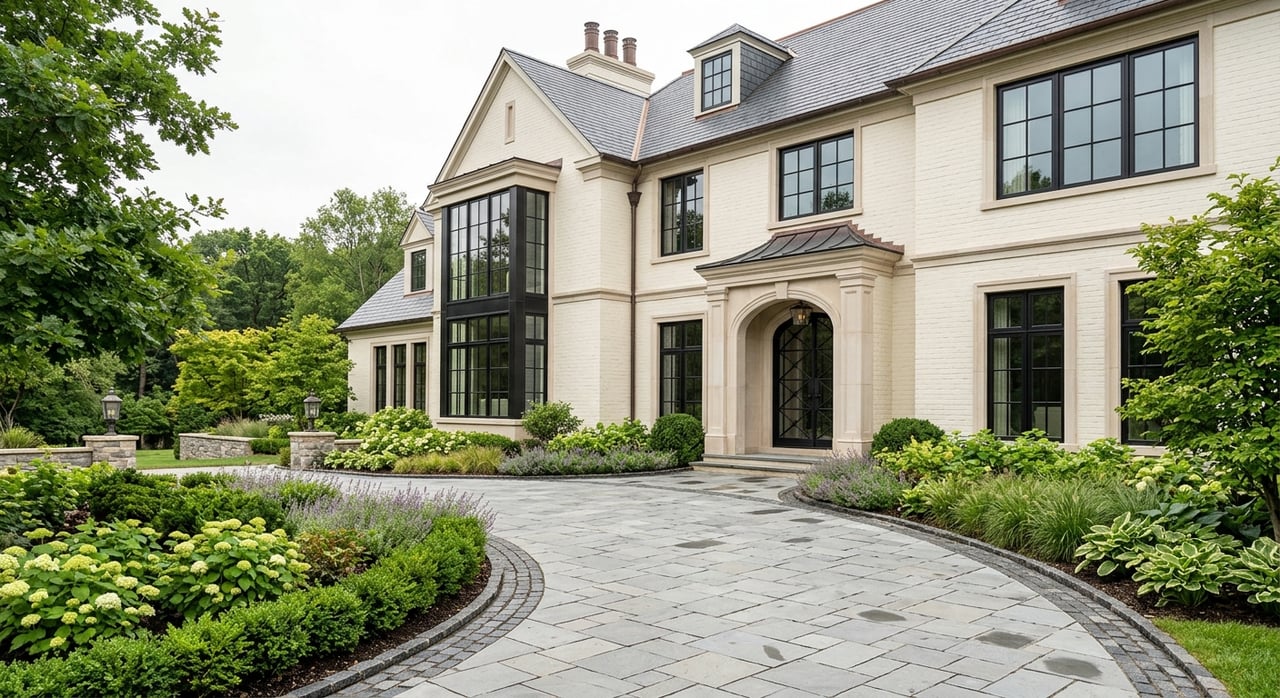
Bloomfield Hills is not defined by one single home style. The city’s master plan notes that variety in home design and landscape is part of what sustains its prestige. As you move through the area, you can see how older estates, custom homes, and later reinvestment all contribute to a layered residential character.
That mix is a major part of the appeal. Rather than a one-note look, Bloomfield Hills offers a broad architectural conversation shaped by history, craftsmanship, and setting. For buyers who care about design, that can make the search here especially compelling.
Styles you may notice
Local preservation and planning sources point to a mix of historic and modern architecture across the city’s woodsy terrain. In practical terms, you may encounter influences that include:
- Tudor-inspired homes
- Gothic elements
- Modernist design
- Custom estate architecture
What ties these together is not sameness. It is the way homes are integrated with landscaping, setbacks, and the natural contours of the land.
Cranbrook helps define the local identity
Cranbrook is one of the clearest examples of how Bloomfield Hills blends architecture, landscape, and cultural life. National Park Service documentation describes the campus as more than 300 acres on former farmland, now home to the Booth residence, schools, an art academy, a science museum with a planetarium, and a church. It is deeply tied to the Booth family and to architect Eliel Saarinen.
Cranbrook House itself is described as English Tudor, while Christ Church Cranbrook is identified as English Gothic. Landscape history sources also describe Cranbrook House and Gardens as combining Arts & Crafts, Italianate, and Picturesque elements across more than 40 acres of gardens. Together, these details reinforce a bigger local truth: in Bloomfield Hills, architecture is rarely separated from landscape design.
What everyday living feels like
Daily life in Bloomfield Hills is shaped less by a broad downtown and more by privacy, destination amenities, and residential calm. The city notes that its business district is concentrated along Woodward Avenue and Long Lake Road rather than spread throughout the community. That keeps much of the city focused on homes, grounds, and a quieter pace.
At the same time, residents remain close to shopping districts, dining, and cultural attractions. This combination can appeal to buyers who want access without feeling surrounded by commercial activity. You get convenience nearby, but the residential setting remains the main feature.
A lifestyle centered on destination amenities
Bloomfield Hills offers amenities that feel more curated than commercial. Cranbrook welcomes the public for events, programs, tours, and volunteer opportunities, giving the city a visible cultural anchor. For many residents, that kind of destination adds richness to everyday life without changing the city’s residential character.
Private clubs also play a notable role in the local lifestyle. City materials highlight Bloomfield Open Hunt, Bloomfield Hills Country Club, Stonycroft Golf Club, and The Village Club, with amenities that include equestrian facilities, golf, tennis, swimming, fitness, dining, and social programming. That supports a lifestyle that feels enclave-like and established rather than retail-driven.
What buyers should understand
If you are buying in Bloomfield Hills, it helps to look beyond surface-level impressions. A home here is often part architecture, part landscape, and part long-term setting. The way a property sits on its lot, the maturity of the trees, the privacy from the street, and the overall site composition can all influence how it lives and how it is perceived over time.
This is also a market where variety matters. You may find older estate properties, custom-built homes from later eras, and residences that have been updated or reinvented carefully. Understanding construction quality, reinvestment potential, and how the property fits the surrounding streetscape can be especially valuable in a design-conscious area like Bloomfield Hills.
What sellers should keep in mind
If you are selling in Bloomfield Hills, your home’s story often goes beyond room count and finishes. Buyers in this type of market tend to respond to setting, privacy, design integrity, and the relationship between the home and the land. A thoughtful marketing approach should help those elements come through clearly.
Presentation also matters because Bloomfield Hills is not a uniform market. Homes may differ significantly in style, age, and site characteristics, which means strategic positioning is essential. For sellers of custom or estate-style properties, it is important to communicate not only what the home has, but why it fits this particular setting.
Why local guidance matters here
In a community like Bloomfield Hills, real estate decisions often involve nuance that does not show up in a quick online search. The appeal of a property may depend on how the land is shaped, how the architecture relates to the surroundings, or how past updates affect long-term value and marketability. Those details matter more in an established estate setting than they might in a more standardized neighborhood.
That is where experienced local guidance can make a real difference. In design-forward and privacy-oriented markets, you want insight that goes beyond basic listing data. You want someone who understands how buyers interpret craftsmanship, site planning, and neighborhood fit in a premium residential environment.
If you are exploring Bloomfield Hills as a buyer, seller, or investor, working with a local advisor who understands luxury homes, build quality, and discreet strategy can help you move with more clarity. To start a conversation about Bloomfield Hills real estate, connect with Rob Haber Real Estate.
FAQs
What is Bloomfield Hills known for as a residential community?
- Bloomfield Hills is known for being a small, primarily residential city with large lots, tree-lined streets, generous setbacks, rolling terrain, wooded settings, and distinctive architecture.
What types of homes are common in Bloomfield Hills?
- Bloomfield Hills includes a mix of older estates, later custom homes, and carefully updated properties, with architectural influences that can include Tudor, Gothic, modernist, and other custom estate styles.
What is daily life like in Bloomfield Hills?
- Daily life in Bloomfield Hills is shaped by privacy, quiet residential streets, nearby shopping and dining access, cultural destinations like Cranbrook, and private club amenities rather than a large commercial core.
Why does Cranbrook matter in Bloomfield Hills?
- Cranbrook is a major local landmark that reflects the city’s connection to architecture, landscape design, and cultural life through its campus, historic buildings, gardens, events, and programs.
What should buyers look for in a Bloomfield Hills property?
- Buyers should pay attention to the relationship between the home and the land, including privacy, lot layout, tree cover, architecture, site planning, and the quality of updates or construction.
What should sellers highlight when listing a Bloomfield Hills home?
- Sellers should highlight the property’s setting, privacy, architectural character, landscape features, and how the home fits the broader estate-style environment of Bloomfield Hills.