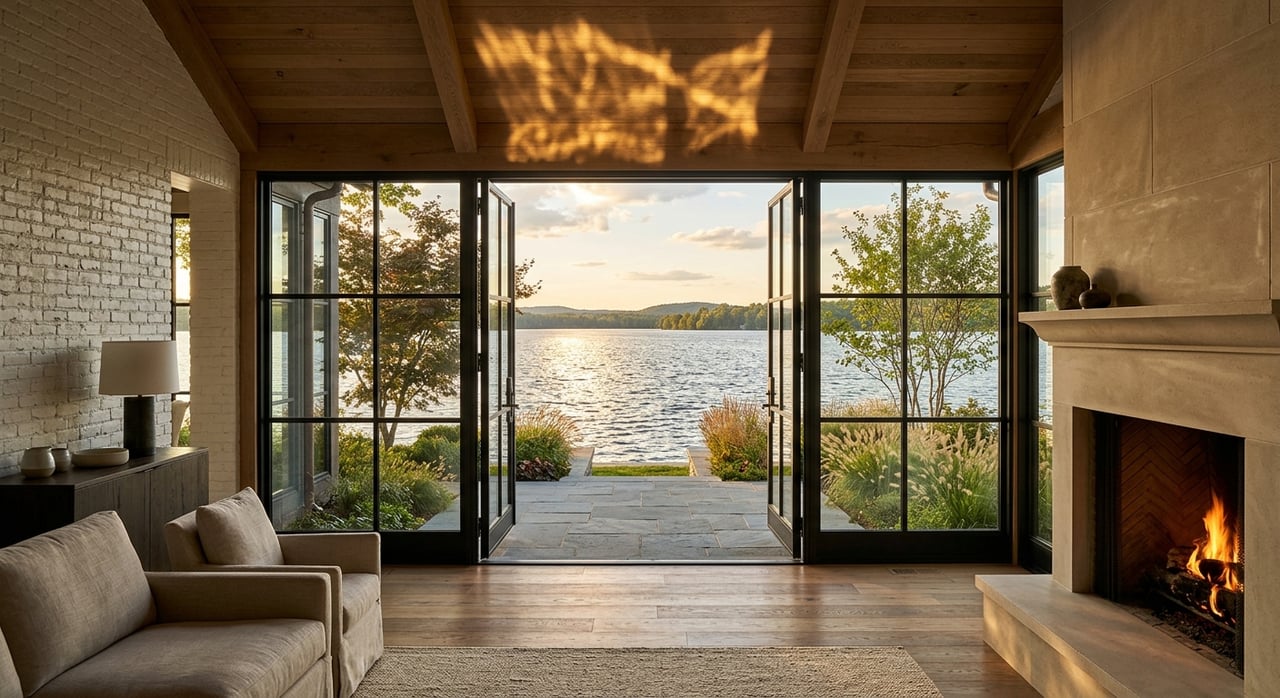
If you picture lake living as a summer-only escape, Orchard Lake may surprise you. This is a small, water-centered community where waterfront homes are part of daily life, not just weekend life, and where the lake shapes everything from privacy to property value. If you are thinking about buying or selling here, it helps to understand how the lifestyle, housing stock, and local rules all work together. Let’s dive in.
Why Orchard Lake Feels Different
Orchard Lake Village is unusually defined by water. The city covers only four square miles, and its zoning ordinance shows that 42% of that area is open water, while 38% is residential land use. In practical terms, that means the lake is not just a backdrop. It is the center of the community.
That relationship shows up in the housing market too. According to the city’s 2024 master plan, residential lakefront property accounted for 72.62% of total equalized value in 2022. When so much of a community’s value is tied to waterfront homes, buyers and sellers can expect the lake itself to influence demand, pricing, and long-term appeal.
The same master plan explains why inventory can feel tight. Orchard Lake Village has 888 housing units and is described as being near capacity. For you, that often means fewer opportunities, especially if you are looking for a prime stretch of frontage or a larger lot.
Daily Life on Orchard Lake
Living on Orchard Lake means being connected to a real, active lake environment. Michigan DNR describes Orchard Lake as a 788-acre kettle lake in south-central Oakland County, with fairly clear water, abundant aquatic plants, and a shoreline of 28,861 feet. It also has three islands totaling 35 acres and two deep basins, which gives the lake a more varied feel than a simple shoreline loop.
One of the most appealing parts of daily life here is that the shoreline can feel more secluded than you might expect. The DNR notes there are surprisingly few homes along the shoreline compared with the surrounding development density, with clusters concentrated on the northwest, west, and southeast shores. For privacy-minded buyers, that helps explain why Orchard Lake often feels quieter and more tucked away than other suburban waterfront settings.
At the same time, this is not a still, unused lake. Boating is a major part of the lifestyle, and there is a public access site on the southwest side off Orchard Lake Road with a hard-surfaced ramp and parking for 63 vehicles. The result is a lake that feels active in season, but also structured and managed.
What the Boating Experience Is Like
If boating matters to you, Orchard Lake offers room to enjoy it without feeling unregulated. Local watercraft controls set a 40 mph speed limit on the lake and require slow-no-wake within 200 feet of the public access site. That balance matters because it supports recreation while also setting some guardrails for safety and shoreline impact.
From a lifestyle standpoint, your experience on the water may vary depending on where a home sits. Some stretches are likely to feel more active because of boat traffic and access patterns, while others may be better suited for quiet views, privacy, or a more relaxed day-to-day rhythm. That difference can shape what kind of waterfront property feels right for you.
For buyers, this is where a showing should go beyond the home itself. The view, dock setup, water depth, shoreline exposure, and boating patterns can all affect how you use the property. A home that looks ideal online may feel very different once you understand how the water works around it.
Orchard Lake Homes: From Cottage Roots to Luxury Residences
Orchard Lake’s housing story has changed over time. The city’s 2024 master plan describes the community’s early development as resort-oriented, with many properties originally used as cabins, cottages, or second homes for Detroit-area residents. Over time, that pattern shifted toward year-round suburban living and later toward larger, higher-quality homes.
That history still shows up in today’s market. You may find traces of older cottage-era waterfront homes, but the present-day identity of Orchard Lake is more closely tied to spacious single-family residences and upper-end lakefront properties. This mix is part of what gives the area character.
The city also notes a wide range of lot sizes and architectural styles in its single-family areas. Some homes sit on smaller, more historic parcels, while others occupy much larger sites that read more like estate properties. If you are comparing homes here, lot size can have just as much impact as square footage.
How Lot Size Shapes the Market
One reason Orchard Lake properties can feel so different from one another is zoning. The city’s four single-family districts use minimum lot sizes of 15,000, 20,000, 40,000, and 60,000 square feet. That framework helps explain why one waterfront home may feel compact and long-established, while another feels expansive and more private.
The master plan also says newer construction has tended to concentrate in Zone 3, where lots are 40,000 square feet or larger. That matters if you are drawn to newer homes, larger footprints, or more substantial outdoor space. In many cases, the upper end of the market is tied not just to the house itself, but to larger lots and stronger frontage.
For sellers, this is an important pricing point. Two waterfront homes in the same city can offer very different value depending on lot size, positioning, and how the property interacts with the shoreline. In a market this nuanced, broad averages rarely tell the full story.
Waterfront Ownership Comes With Rules
One of the biggest misconceptions about lakefront living is that you simply buy the view and enjoy it. In Orchard Lake, ownership is more hands-on than that. The lake is actively managed, and the city references an Orchard Lake Water Quality Improvement Assessment District that helps fund weed harvesting, removal of navigation hazards, marine safety, goose removal, and related lake services.
That tells you something important about daily ownership. A premium waterfront setting also requires ongoing stewardship, shared use, and local coordination. Shoreline condition, water quality, navigation, and seasonal lake activity all matter.
The city’s 2025 agreement also notes that state permits are required before herbicide can be applied to control invasive plants. For homeowners, this is a reminder that maintenance decisions on the water are not always as simple as they seem. What you can do, when you can do it, and whether approval is needed may all affect your plans.
Docks, Hoists, and Shoreline Use
Orchard Lake’s zoning ordinance allows docks, boat hoists, rafts, and other seasonal fixtures on waterfront lots or parcels, even if no principal structure is present, subject to city rules. That flexibility may be helpful if you are evaluating how a property functions for boating and recreation. Still, the details matter.
Michigan EGLE guidance says permanent docks or boat hoists left in year-round require a permit, while seasonal private non-commercial docks and hoists generally do not if they meet the agency’s conditions. EGLE also says shore-protection structures can negatively affect natural resources and should be used only when needed to address erosion. In simple terms, shoreline improvements can involve more review than many buyers expect.
If you are buying, this is worth checking early. A property’s dock arrangement, shoreline protection, and seasonal setup can directly affect usability, maintenance costs, and future plans. If you are selling, these same features may raise questions from serious buyers who want clarity before they act.
What Buyers Should Watch Closely
Waterfront shopping in Orchard Lake is about more than finishes and floor plans. The best fit often comes down to how a home supports the way you want to live on the lake.
As you compare options, pay attention to:
- Whether the property offers direct lakefront ownership or a different type of access arrangement
- How private or active the shoreline feels during boating season
- The size and shape of the lot
- Existing dock and hoist setups
- Shoreline condition and any visible erosion concerns
- How the home balances water views with practical lake use
A quiet-view property and a boating-first property are not always the same thing. Knowing your priorities can help you narrow the field much faster.
What Sellers Should Highlight
If you own a waterfront home in Orchard Lake, your property likely deserves more specific positioning than a standard suburban listing. Buyers here are often evaluating not just design and size, but frontage quality, privacy, boating usability, and long-term maintenance considerations.
That means the most effective marketing usually goes deeper than room counts. Clear presentation of lot characteristics, shoreline features, dock potential, and the home’s relationship to the water can help buyers understand the asset more fully. In a limited-inventory market near capacity, that kind of detail can matter.
It also helps to frame the home within Orchard Lake’s broader story. This is a community shaped by its waterfront, with a housing stock that ranges from cottage-era roots to larger luxury residences. When that context is presented well, buyers can better see why certain homes command stronger attention.
Why Orchard Lake Appeals to Luxury Buyers
For many buyers in Oakland County, Orchard Lake offers a rare mix of privacy, prestige, and everyday waterfront living. The city’s limited size, near-capacity housing supply, and high share of value tied to lakefront homes all support the idea that this is a specialized market, not a broad one. That tends to draw buyers who are looking for something harder to replicate.
The appeal is not only visual. It is also practical. You get a year-round residential setting, a real boating culture, and housing options that range from established waterfront homes to larger, more substantial properties on generous lots.
If you are trying to decide whether Orchard Lake fits your goals, the key is to look past the postcard image. The best purchase here is one that matches your preferred pace on the water, your privacy expectations, and the level of upkeep you are comfortable managing.
Whether you are buying a lakefront home or preparing to sell one, a thoughtful strategy matters in a market this specific. For tailored guidance on Orchard Lake waterfront properties, connect with Rob Haber Real Estate.
FAQs
What is daily life like on Orchard Lake in Michigan?
- Daily life on Orchard Lake blends year-round residential living with boating, waterfront views, and ongoing shoreline upkeep in a closely managed lake environment.
What kinds of waterfront homes are available in Orchard Lake?
- Orchard Lake homes range from older, smaller waterfront properties with cottage-era roots to larger single-family and upper-end lakefront residences on more substantial lots.
How private do Orchard Lake waterfront homes feel?
- Michigan DNR notes there are surprisingly few homes along the shoreline compared with surrounding development density, which helps many areas feel relatively secluded.
What boating rules apply on Orchard Lake?
- Orchard Lake has a 40 mph speed limit, and slow-no-wake rules apply within 200 feet of the public access site on the southwest side of the lake.
What should buyers know about docks and shoreline permits on Orchard Lake?
- Seasonal private non-commercial docks and hoists generally may not require a permit if they meet state conditions, but permanent year-round installations and some shoreline work can require permits.
Why is Orchard Lake inventory often limited?
- Orchard Lake Village has 888 housing units and is near capacity, which helps explain why waterfront opportunities can be limited, especially on prime frontage.